
A cracked walkway. An overgrown lawn. A blocked drain. A leaking roof. A broken exterior light. Most commercial property problems do not become expensive overnight. They usually start small, get overlooked, and then turn into a much larger repair bill. That is the biggest difference between preventive and reactive commercial property maintenance.
Reactive maintenance means waiting until something breaks before dealing with it. Preventive maintenance takes a different approach. It involves regular inspections, cleaning, repairs and upkeep designed to catch problems before they become disruptive or expensive.
For commercial property owners and managers, the question is not whether maintenance costs money. It does.
The better question is: which approach gives you more value for every dollar spent?
In most cases, preventive maintenance comes out ahead because it reduces unexpected repairs, protects the appearance of the property, extends the useful life of exterior assets and helps keep tenants, customers and employees comfortable.
For businesses such as Clean Store Front, maintenance is not simply about making a property look tidy. It is about helping commercial properties stay presentable, functional and ready for business throughout the year.
What Is Preventive Commercial Property Maintenance?
Preventive maintenance is planned property care carried out on a regular schedule.
Instead of waiting for something to fail, property owners arrange inspections and maintenance based on the age, condition and needs of the building and surrounding grounds.
This can include:
- Regular exterior inspections
- Pressure washing and surface cleaning
- Gutter and drainage checks
- Lawn and landscape care
- Tree and shrub maintenance
- Parking lot and walkway inspections
- Exterior lighting checks
- Seasonal property preparation
- Removal of weeds and debris
- Repairs to minor exterior damage
The idea is straightforward.
Find the problem while it is still small.
A small crack in a walkway may be relatively easy to address. Leave it for months, expose it to repeated weather changes and heavy foot traffic, and the eventual repair can become far more involved.
The same principle applies to landscaping. A few weeds are easy to manage. An unmanaged commercial landscape can quickly become overgrown, unattractive and much more expensive to restore.
What Is Reactive Commercial Property Maintenance?
Reactive maintenance starts when something has already gone wrong.
A tenant reports a problem. A customer notices an unsafe area. A property manager sees that the landscaping has become severely overgrown. A storm damages part of the property.
Then the maintenance team is called.
Reactive maintenance has its place. Emergencies cannot always be predicted, and unexpected damage will happen even to well-maintained properties.
The problem occurs when reactive maintenance becomes the normal maintenance strategy.
Instead of planning maintenance into the property’s operating budget, owners are constantly responding to urgent problems.
That can create a frustrating cycle:
Problem → emergency repair → expense → temporary solution → another problem.
Over time, the costs can add up.
Preventive vs Reactive Maintenance: The Real Cost Difference
At first glance, preventive maintenance can seem like an additional expense.
Why pay for regular inspections and upkeep when everything appears to be working?
Because appearances can be misleading.
Consider a commercial property with poor drainage. A minor drainage issue may not seem urgent during a dry spell. Once heavy rain arrives, however, standing water can affect landscaping, walkways and other areas around the property.
The initial maintenance could have been relatively simple.
The later repair may involve several contractors, replacement materials, cleanup and disruption to the property.
This is where preventive maintenance earns its keep.
You are not necessarily spending less on maintenance itself. You are spending more strategically and reducing the likelihood of expensive surprises.
Five Ways Preventive Maintenance Can Save Money
1. It Helps Catch Small Problems Early
Small problems are usually cheaper to fix than large ones.
That sounds obvious, but it is easy to forget when property managers are dealing with tenants, staff, customers, budgets and daily operations.
Regular inspections create an opportunity to identify issues before they become urgent.
A professional maintenance provider can spot problems that may not be obvious to someone who passes through the property every day.
That outside perspective can be valuable.
2. It Extends the Life of Property Assets
Commercial properties contain numerous assets that require regular care.
Landscaping, paved areas, exterior surfaces, drainage systems, fencing and other features all deteriorate over time.
Proper maintenance does not make these assets last forever. It can, however, help slow deterioration.
For example, regular cleaning can prevent dirt, organic debris and staining from becoming deeply embedded in exterior surfaces. Consistent landscape care can prevent vegetation from becoming difficult to control.
The result is a property that stays in better condition for longer.
3. It Reduces Emergency Expenses
Emergency work often comes with a premium.
When something needs immediate attention, the property owner has fewer options. There may be little time to compare service providers, schedule convenient work or plan around the property’s operating hours.
Preventive maintenance gives you more control.
You can schedule work in advance, plan budgets and address several issues during one visit instead of dealing with each problem separately.
That predictability is valuable for any commercial operation.
4. It Protects Your Property’s Appearance
A commercial property makes an impression before anyone walks through the front door.
Dirty exterior surfaces, neglected landscaping, weeds, litter and poorly maintained grounds can make customers question how the business operates inside.
This is especially important for retail locations, offices, restaurants, medical facilities and other customer-facing businesses.
Professional commercial grounds maintenance helps keep outdoor areas looking organised and cared for.
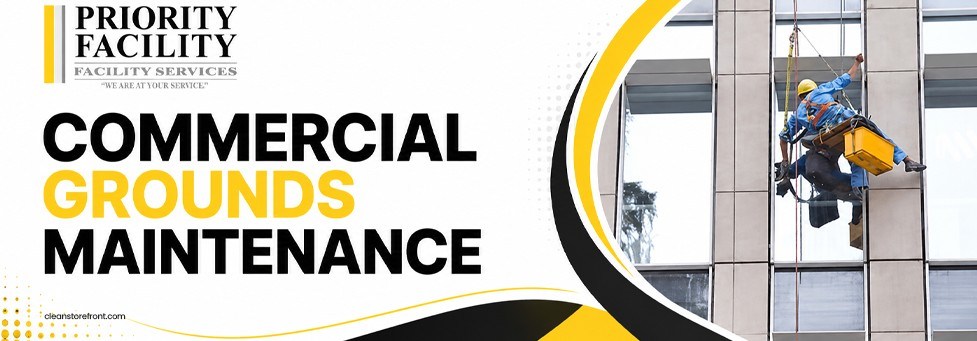
That can include lawn mowing, edging, weed control, shrub care, seasonal cleanups and general grounds upkeep.
A clean, maintained exterior tells visitors that someone is paying attention.
5. It Helps Avoid Business Disruption
A major maintenance problem does not only cost money to repair.
It can also cost money through disruption.
If part of a property becomes inaccessible, unsafe or unattractive, customers may have a different experience. Employees may have to work around repairs. Tenants may complain. Business operations can become more complicated.
Preventive maintenance reduces the likelihood of avoidable disruptions.
That is a financial benefit that does not always appear on a maintenance invoice.
Why Commercial Grounds Maintenance Should Not Be Overlooked
When people think about commercial property maintenance, they often picture the building itself.
The grounds deserve just as much attention.
Your parking areas, lawns, planted beds, trees, sidewalks and outdoor spaces are part of the property experience.
Poorly maintained grounds can create several issues at once.
Overgrown vegetation can obstruct signs or walkways. Leaves and debris can accumulate in drainage areas. Weeds can spread through landscaped beds. Damaged branches can become a safety concern. Neglected lawns can make an otherwise attractive building look tired.
Regular grounds maintenance services help prevent these issues from building up.
For property owners managing multiple locations, outsourcing grounds care can also make sense because it creates a consistent maintenance schedule without requiring an internal team to handle every outdoor task.
Preventive Maintenance Is Not Just About Saving Money
There is another side to the equation: protecting the property’s value.
Commercial real estate is a major investment. Neglecting routine maintenance can gradually affect its condition and appearance.
A property that looks cared for is easier to present to prospective tenants, customers and visitors.
It can also give owners more confidence when inspections, property evaluations or lease discussions come around.
Think of preventive maintenance as protecting the investment you already made.
You would not buy a commercial vehicle and never service it. You would not expect equipment to operate indefinitely without inspections.
A commercial property deserves the same mindset.
Is Reactive Maintenance Ever the Better Choice?
Yes.
Not every maintenance task needs to be scheduled months in advance.
If a storm causes damage, something breaks unexpectedly or an immediate safety issue appears, reactive maintenance is necessary.
The goal is not to eliminate reactive maintenance completely.
The goal is to reduce avoidable reactive maintenance.
There is a major difference between responding to an unexpected event and constantly fixing problems that could have been prevented.
A strong maintenance strategy combines both approaches.
Preventive maintenance handles predictable needs.
Reactive maintenance handles unexpected issues.
Together, they provide a more practical system for managing a commercial property.
How to Build a Smarter Maintenance Schedule
A good maintenance programme starts with understanding the property.
Every building and site has different requirements.
A busy retail property may need frequent exterior cleaning and grounds care. An office building may have different landscaping and seasonal requirements. A large commercial site may require more frequent inspections simply because there is more ground to cover.
Start by identifying:
- Which areas require weekly attention?
- Which tasks should be completed monthly?
- Which systems need seasonal inspections?
- Where have recurring problems occurred?
- Which areas receive the most customer or employee traffic?
- What maintenance has been postponed?
- Which exterior areas affect curb appeal the most?
Once those questions are answered, maintenance becomes much easier to organise.
Instead of reacting to whatever problem appears next, you have a plan.
Why Professional Maintenance Can Be a Better Investment
Managing a commercial property is already a demanding job.
Property managers may be responsible for tenants, leases, contractors, budgets, compliance, inspections and countless daily details.
Adding every maintenance task to that list is not always practical.
Professional maintenance providers can bring consistency to the process.
At Clean Store Front, the focus is on helping commercial property owners and managers maintain properties that look clean, orderly and cared for.
That matters because maintenance is not simply an expense sitting on a spreadsheet.
It supports the way a property performs.
A clean exterior can improve first impressions. Well-maintained grounds can make a site more welcoming. Regular upkeep can reduce the number of unpleasant surprises. Planned service can make maintenance spending easier to manage.
Preventive Maintenance Usually Wins the Money Question
So, which saves more money: preventive or reactive maintenance?
For most commercial properties, preventive maintenance is the smarter long-term investment.
Reactive maintenance may appear cheaper when everything is working. But once problems become urgent, repair costs, disruption and business impact can quickly outweigh the initial savings.
Preventive maintenance provides something equally important: control.
You can plan your spending.
You can schedule work.
You can identify issues earlier.
You can protect the appearance of your property.
And you can give your building and grounds the consistent care they need.
The goal is not to spend money maintaining a property for the sake of maintenance.
The goal is to spend strategically so that today’s small maintenance investment does not become tomorrow’s major repair bill.
Keep Your Commercial Property Ready for Business
Your property represents your business long before a customer speaks with an employee.
The condition of the grounds, exterior surfaces, entrances and surrounding areas all contribute to that first impression.
With the right commercial property maintenance strategy, you can stay ahead of common problems instead of constantly chasing them.
Clean Store Front can help make that process easier with professional property upkeep designed around the needs of commercial spaces.
Because when your property looks cared for, it works harder for your business.
And when maintenance is planned instead of postponed, your budget has a much better chance of working for you too.
Frequently Asked Questions
Preventive maintenance involves planned inspections, cleaning, landscaping and repairs designed to prevent problems. Reactive maintenance happens after a problem has already occurred and requires attention.
Preventive maintenance involves regular spending, but it can reduce larger repair costs and unexpected disruptions over time. The objective is to manage maintenance costs more predictably rather than eliminate them.
Commercial grounds maintenance can include lawn care, mowing, edging, weed control, shrub and tree care, seasonal cleanups, debris removal and general upkeep of outdoor areas.
The ideal schedule depends on the property’s size, usage, landscaping, location and condition. Some tasks may need weekly attention, while other inspections can be scheduled monthly, quarterly or seasonally.
Professional grounds maintenance services provide consistent care for outdoor areas without requiring property owners or employees to manage every landscaping and upkeep task themselves. This can help maintain curb appeal and reduce neglected maintenance issues.